Open any developer Slack channel in Bangalore, Pune, or Hyderabad right now and you’ll hear the phrase: “I just vibe coded this.” It sounds informal — almost dismissive of real engineering — but it describes a genuine shift in how software gets built in 2025. This is vibe coding AI development in India in practice: product teams, solo founders, and even non-technical PMs are now shipping working features by describing what they want in plain English and letting an AI model write the code.
This post breaks down what vibe coding actually is, how it differs from the autocomplete tools developers have used for years, which tools are driving the trend, who’s adopting it, and — just as importantly — where it falls apart.
What Vibe Coding Actually Means
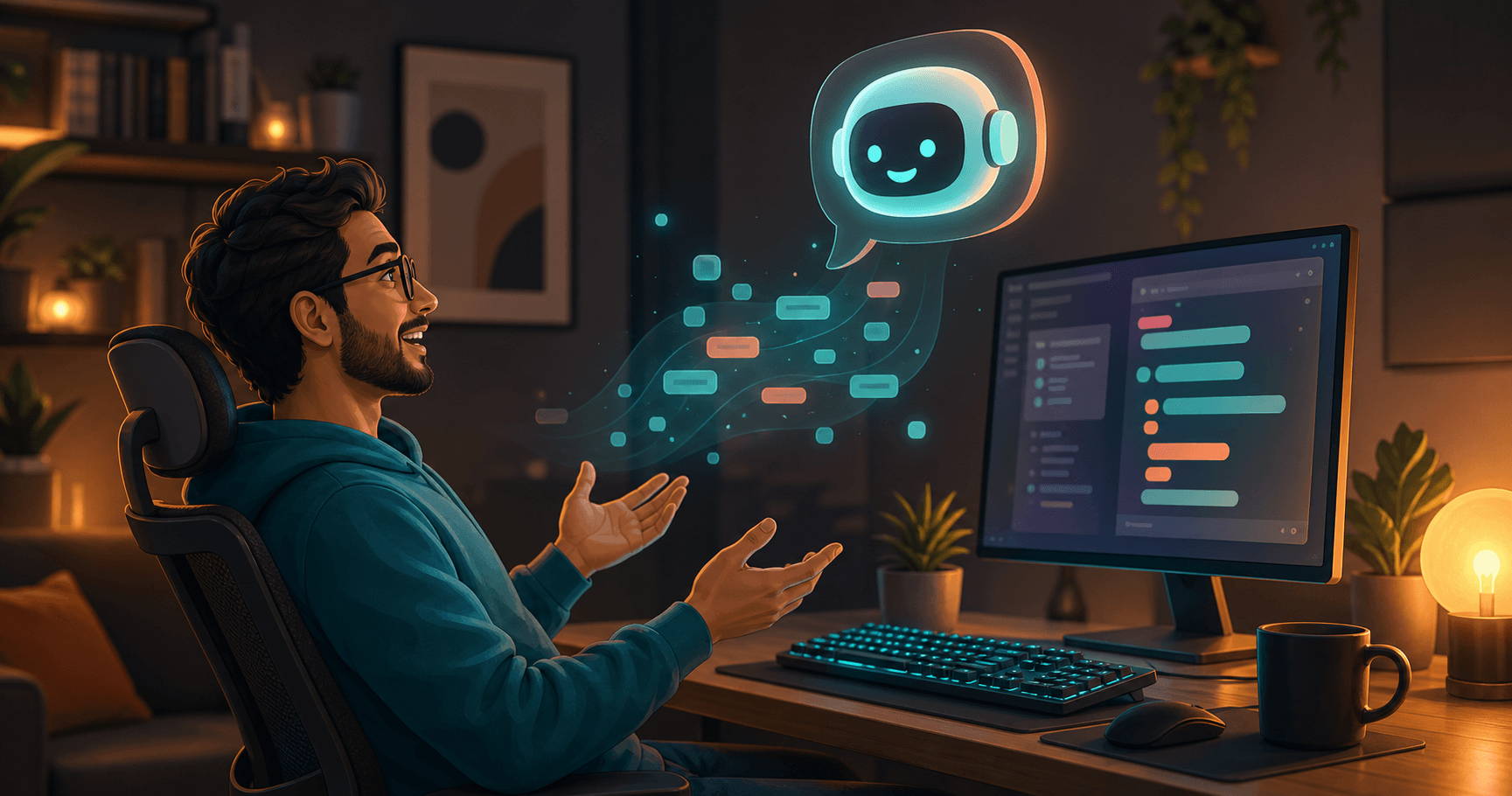
Vibe coding is the practice of describing a desired outcome in natural language and letting an AI model generate, run, and iterate on the code, with the human acting more as a reviewer and director than a line-by-line author. The term was popularised in 2025 to capture a specific feeling: you’re not typing syntax, you’re steering intent. For example, you say “add a CSV export button to the orders table that respects the current filters,” and the AI writes the function, wires up the route, and often runs the tests itself.
The defining trait isn’t the tool — it’s the posture. Because you’re working at the level of product requirements, not implementation details, you’re trusting the model to handle the translation.
Vibe Coding vs. Copilot-Style Autocomplete
It’s easy to lump vibe coding in with GitHub Copilot and call it a day, but the two solve different problems:
- Autocomplete tools (classic Copilot) predict the next few lines based on what you’re already typing. You’re still the author; the AI is a fast typist sitting next to you.
- Vibe coding tools take a goal, not a cursor position. You describe the feature, and the AI plans the implementation, touches multiple files, runs commands, and reports back. The unit of interaction is a task, not a keystroke.
This is the difference between “finish my sentence” and “do this for me.” As a result, it’s a meaningfully bigger leap in how much the developer delegates.
The Tools Driving the Trend
A handful of products have made vibe coding mainstream over the past year:
- Cursor — an AI-native fork of VS Code with a chat interface that can read your whole codebase and make multi-file edits.
- Lovable — built for product founders, generates a working React app from a conversation and syncs straight to GitHub.
- Bolt — runs a full-stack environment in the browser via WebContainers, so you go from prompt to a live preview in seconds.
- v0 by Vercel — focused on UI generation, producing clean Shadcn/UI components from a description or a screenshot.
- Windsurf — Codeium’s agentic IDE, similar in spirit to Cursor with its own “Cascade” flow for multi-step changes.
Each tool sits at a slightly different point on the spectrum between “I want a finished app” and “I want a senior engineer’s pair-programming partner,” which is why teams often end up using more than one.
Who’s Actually Using Vibe Coding AI Development in India
Three distinct groups have adopted vibe coding, for different reasons:
- Solo founders use it to get a clickable demo in front of investors or early customers without hiring a developer first.
- Non-technical PMs use it to test a feature idea or build an internal tool without filing a ticket and waiting two sprints.
- Experienced developers use it to move faster on the parts of the job that were never the interesting part anyway — boilerplate, CRUD scaffolding, test stubs, migration scripts.
That last group matters most for the long-term trend. Because senior engineers — not just non-technical founders — are starting to rely on these tools daily, it’s stopping being a novelty and starting to be infrastructure.
Where It Breaks Down
Vibe coding has real, well-documented risks that Indian teams are running into as adoption scales:
- Security gaps — AI-generated code frequently ships with insecure defaults: missing input validation, permissive CORS, hardcoded secrets, and authorization checks that look right but aren’t.
- Unmaintainable code — without architectural guardrails, a vibe-coded app can turn into a pile of working-but-incoherent files that no developer, including the original AI, can safely modify six months later.
- False confidence — a feature that runs without errors isn’t the same as a feature that’s correct. Non-technical builders especially tend to mistake “it didn’t crash” for “it’s done.”
None of this means vibe coding is a bad idea. However, it does mean it needs the same engineering discipline — code review, testing, and architectural thinking — that any other development approach needs. In other words, the tool changed; the responsibility for shipping correct software didn’t.
How Indian Product Teams Are Adopting It in 2025
The pattern we’re seeing across vibe coding AI development in India is a hybrid one: vibe coding for speed at the edges, professional engineering at the core. Teams use AI tools to prototype a feature or validate an idea in hours, then bring in experienced developers to harden it — adding tests, fixing the data model, closing security gaps — before it touches real customer data or revenue.
This is, in practice, the same conversation as “build vs. buy,” just one layer down: AI-generated code is a starting point, not a finished product, especially once a feature needs to scale or hold up under audit.
The Bottom Line
Vibe coding AI development is a genuine productivity shift, not a fad. However, it works best as an accelerant inside a disciplined development process, not a replacement for one. If you’re using AI tools to get from idea to demo fast, that’s exactly what they’re good for. On the other hand, if you’re shipping that code to paying customers, you need engineers who can review, secure, and own it.
That’s the gap Quinoid’s product development services are built to close — taking AI-accelerated prototypes and turning them into production-grade software, with the architecture and security review that a 48-hour build can’t provide on its own. In addition, our AI development team works directly with founders who want to build AI-native products from day one, rather than bolting AI on after the fact.
See how this plays out in practice in our Bizpole case study, where we took a fast-moving fintech product from early build to a platform that could handle real regulatory and scale requirements.